Interview Overview

A 40‑year‑old man runs Pissoo Eco‑Lodge in Rostami village, Delvar, Bushehr. The 35‑guest lodge has operated for seven years, located 60m from the sea. Guests experience rural life – chatting with fishermen and shepherds. The lodge hosts traditional music, wood‑restoration workshops, and dolphin‑watching (no boat tours). Food is outsourced to local women in woven baskets. No disposable plastics. The owner prioritises cultural immersion over beach‑villa tourism.

Participant Profile

Age: 40

Gender: Male

Capacity: 35 guests

Experience: 7 years

Interview Type: Telephone

Interview Date: December 09, 2025

Accommodation: Pissoo Eco-Lodge

Location: Rostami Village (Delvar)-Tangestan-Bushehr

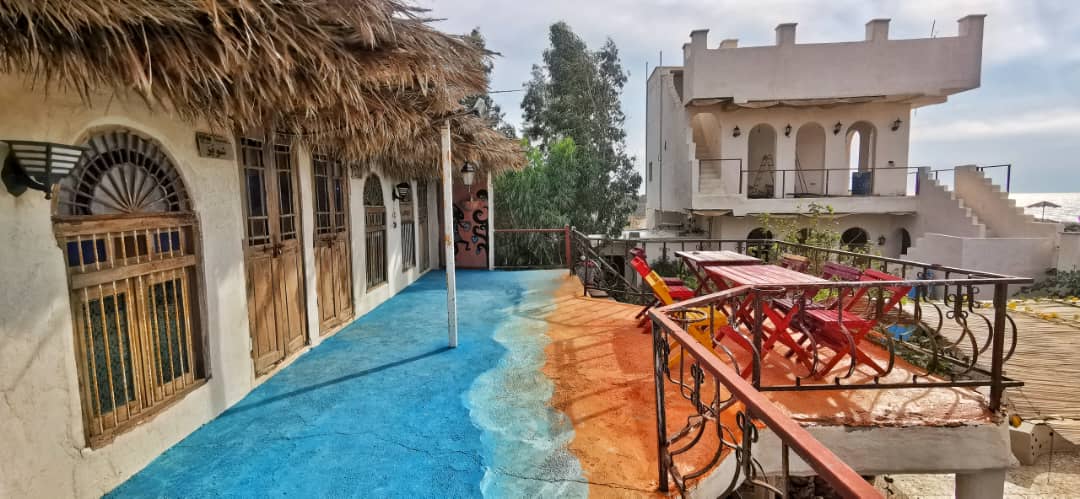
Pissoo Eco-Lodge, Rostami Village (Delvar)

Photo: Property Owner


Interview ID:

1,807

Pissoo Eco-Lodge, Rostami Village (Delvar): Interview Analysis with a 40-Year-Old Male Owner

August 12, 2026

Abstract

This interview analysis explores the perspectives of a 40‑year‑old male owner of Pissoo Eco‑Lodge in Rostami village (Delvar district), Bushehr province. The lodge accommodates 35 guests and has operated for seven years. Located just 60 metres from the sea – with the Zagros mountain range and unique clay formations (Koluts) behind it – the lodge occupies a dramatic landscape that shapes its identity.

From the outset, the owner deliberately targeted visitors seeking cultural immersion rather than conventional beach holidays. Guests are encouraged to interact with local fishermen, shepherds, and villagers – even joining them in daily activities like fishing or herding. The owner has trained as a tour leader and personally guides specialised tours, sharing deep knowledge of local history, including the Sassanian‑era Neyayeshgah temple (with Mithraism symbols), traditional boat‑building (Gelafi), and the historical connection to Nader Shah’s shipwrights from India.

The lodge itself embodies a philosophy of functional heritage: the kitchen has been converted into a wood‑restoration workshop where 100‑150‑year‑old doors and windows are repaired using traditional techniques. Meals are outsourced to 5‑6 local women, who cook in their own homes and deliver food in woven baskets (no disposable plastics). This model directly supports the local economy and fosters guest‑community interaction. Sleeping arrangements include both traditional floor‑sleeping (khab‑e kaf) rooms and newer en‑suite rooms with beds, designed in the style of old Bushehri mansions.

Environmental stewardship is central: the owner discovered a population of 23 Indo‑Pacific humpback dolphins (endangered) in 2019, documented through collaboration with a Kish‑based marine institute. Dolphin‑watching is done from the lodge’s sea‑facing terraces – no boat tours are offered to avoid disturbance. Regular beach clean‑ups involve both tourists and local children. Live traditional music is played, but loud speakers are banned. This case presents a model of deeply researched, community‑embedded, ecologically conscious authenticity, where every element – from food to furniture to dolphin conservation – is deliberately aligned with cultural and environmental values.

Extracted Insights

Key findings from the field interview

1. Targeted Cultural Immersion (Not Beach‑Villa Tourism)

The owner explicitly defines his target audience as travellers seeking authentic rural life and cultural exchange – not visitors expecting a coastal villa. Before arrival, guests receive a set of behavioural guidelines (codes) to ensure they understand they are entering a working village, not a resort. Guests are encouraged to sit with locals, chat with shepherds, and even accompany fishermen. Some visitors have joined shepherds for a day, experiencing herding first‑hand – a unique, unscripted form of participation.

2. Dramatic Landscape as a Living Classroom

The lodge sits in Tangestan – literally “the narrow passage between mountain and sea” – with the Zagros mountain range at its back and the Persian Gulf in front. Behind the lodge are Koluts (clay formations shaped by water and wind erosion), with names like “Camel,” “Miniature,” and “Mars.” The owner describes these as attractions that could occupy visitors for days. Within the Koluts lies the Neyayeshgah temple, dating to the Sassanian era, with symbols suggesting Mithraism (aligned to sunrise). The lodge becomes a base for exploring geological and archaeological wonders.

3. Functional Heritage: Wood‑Restoration Workshop Instead of Kitchen

Perhaps the most distinctive feature: the kitchen was closed and converted into a wood‑restoration workshop. The owner and his wife now restore 100‑150‑year‑old wooden doors and windows, using traditional techniques and reclaimed old timber. This reflects the owner’s philosophy that heritage should be lived and repaired, not merely displayed. The workshop also produces new pieces based on historical patterns, preserving endangered carpentry skills.

4. Community‑Based Food Outsourcing (No Disposable Plastics)

Meals are entirely outsourced to 5‑6 local women who cook in their own homes. Guests either visit these homes (experiencing a traditional meal in a villager’s house, often spending hours in conversation) or have food delivered in woven baskets with reusable plates and pots – no disposable plastics or containers enter the lodge. The lodge takes no commission; all revenue goes directly to the cooks. This model decentralises economic benefit, builds guest‑host relationships, and eliminates single‑use waste.

5. Authenticity Through Functional Handicrafts

The owner observes that handicrafts (woven mats, baskets, tableware) were fading into decorative objects or storage. By using them daily – serving bread in woven baskets, eating on rush mats, hanging natural‑fibre lamps – the lodge demonstrates their practical value. Tourists begin to see these items not as souvenirs but as functional household goods, some even adopting them at home. This rehabilitates local crafts by giving them contemporary relevance.

6. Dolphin Discovery and Conservation Without Commercialisation

In 2019, the owner and his team documented a population of 23 Indo‑Pacific humpback dolphins (Sousa chinensis) – an endangered species – near the lodge. They invited marine biologists from a Kish‑based institute to verify and monitor the population. Critically, the owner does not offer dolphin‑watching boat tours to avoid disturbing the animals. Instead, dolphins can be seen from the lodge’s sea‑facing terraces – a rare, non‑intrusive privilege. This ethical choice contrasts with many coastal operators who would commercialise such a discovery.

Camera Camera Photo: Property Owner

7. Educational Environmental Action (Beach Clean‑ups and Youth Engagement)

The lodge organises regular beach clean‑ups involving tourists and local children – the latter are prioritised because “they are more teachable and hold the future.” These events are framed not as obligations but as participatory experiences. Environmental awareness is also embedded in all cultural events (literary, artistic, musical) hosted by the lodge, with dolphin conservation as a recurring theme.

8. Rejecting Performative Tradition and Guest‑Driven Modification

The owner refuses to distort cuisine to satisfy guest preferences (e.g., no chicken kebabs if not on the menu). He also rejects modernising toilets despite upgrading them for hygiene – he openly acknowledges that bathrooms are the one area intentionally modernised (with virtual sky ceilings and modern lighting), while maintaining traditional aesthetics elsewhere. This selective, honest modernisation – not hiding it – preserves credibility. Live music is played, but loud speakers are banned, maintaining quiet for both neighbours and the natural soundscape.

9. Deep Historical Knowledge and Personal Research

The owner has invested heavily in self‑education: he studied local history, watched archival films, interviewed elderly boat‑builders, and learned about the Gelafi (traditional shipwrights). He explains that during Nader Shah’s Indian campaign, skilled shipbuilders were brought to Bushehr, and locals adapted the “Boom” (a specific dhow type) for local conditions. This detailed historical narrative is shared with guests during tours, adding intellectual depth to the experience.

10. Hospitality as Shared Living (“We are co‑residents”)

The owner re‑branded his lodge as a “homestay house” (khâneh‑ye bumgardi) rather than an eco‑lodge. Guests are told: “You are not tourists; you are co‑residents for a few days.” This linguistic and philosophical shift shapes every interaction. The lodge has filled 14 guestbooks with memories – one guest even invited the owner’s family to their home, cooking ghormeh sabzi for them. Many visitors become extended family.

Conclusion

Pissoo Eco‑Lodge in Rostami village offers a profoundly research‑driven, community‑embedded, and ecologically principled model of coastal hospitality. Its success rests on several key pillars:

  • Targeted cultural immersion: Attracting guests who seek rural life, not beach‑villa comfort – with pre‑arrival guidelines to align expectations.
  • Dramatic landscape integration: Koluts (clay formations), Sassanian temple, and the sea – a geological and historical classroom.
  • Functional heritage workshop: Kitchen converted into wood‑restoration space – preserving 150‑year‑old carpentry and producing new traditional pieces.
  • Zero‑commission community food: Outsourced to local women, delivered in woven baskets – economically empowering and waste‑free.
  • Handicrafts as living tools: Using woven mats, baskets, and tableware daily – rehabilitating crafts through practical demonstration.
  • Dolphin conservation without commercialisation: Documenting endangered humpback dolphins, but offering only terrace‑based observation – no boat tours.
  • Educational environmental action: Beach clean‑ups with tourists and especially children – prioritising future generations.
  • Refusal to distort tradition: No guest‑driven menu changes; selective, honest modernisation (toilets) while acknowledging modifications.
  • Deep historical scholarship: Detailed narratives of Gelafi shipbuilding, Nader Shah’s shipwrights, and Mithraism – adding intellectual substance.
  • Hospitality as shared living: Guests become co‑residents, not consumers – reflected in 14 filled guestbooks and lifelong friendships.

The lodge demonstrates that authenticity is not a surface to be painted, but a practice to be lived. By closing the kitchen to restore wood, by letting local women cook in their own homes, by refusing to commercialise dolphins, and by inviting guests into shepherds’ daily lives, the owner has built a model where heritage, community, environment, and hospitality are seamlessly interwoven. This case offers a powerful lesson for coastal eco‑tourism: when you treat your lodge as a living museum of skills and relationships – not a stage – guests become participants in a story far richer than any script.