Interview Overview

A 41‑year‑old man runs Negin‑e Sabz Eco‑Lodge in Cham Darvahi village, Ab Pakhsh, Bushehr. The 25‑28 guest lodge has operated for eight years, located in the world’s densest palm grove (25km stretch). Guests experience floor sleeping (thick cotton mattresses), traditional mudbrick architecture, and tours of the palm grove, mat‑weaving, and local cooking (Reshteh Tapak – a revived forgotten dish). Live music (Sharvah, Khayyam) and quality food define the brand.

Participant Profile

Age: 41

Gender: Male

Capacity: 25-28 guests

Experience: 8 years

Interview Type: Telephone

Interview Date: December 14, 2025

Accommodation: Negin-e Sabz Eco-Lodge

Location: Cham Darvahi Village (Ab Pakhsh)-Bushehr

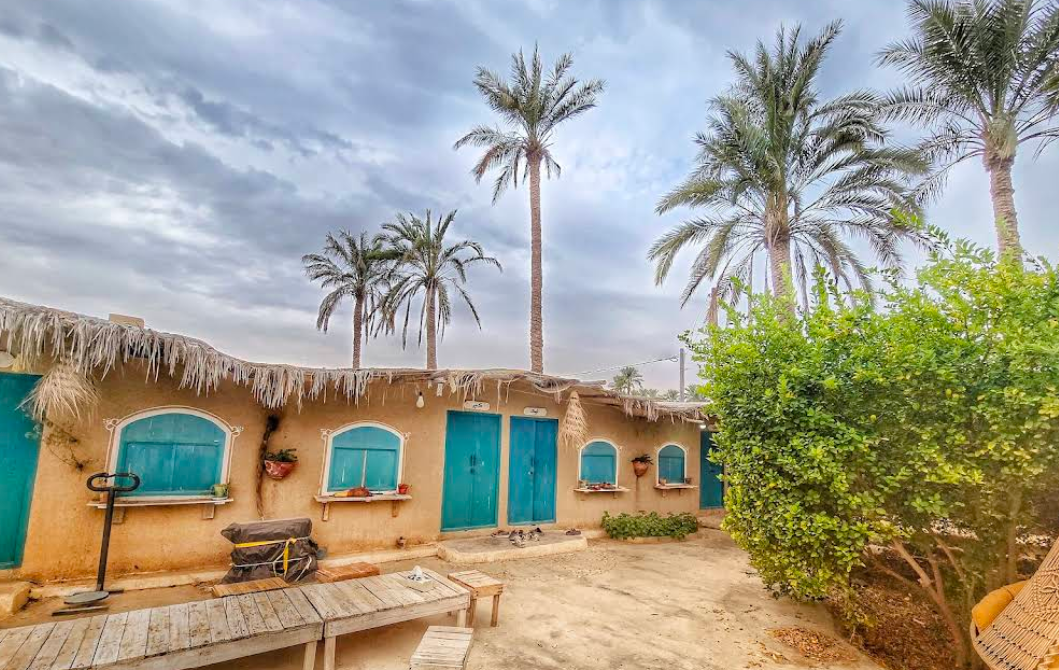
Negin-e Sabz Eco-Lodge, Cham Darvahi Village

Photo: Yashar Samadi


Interview ID:

1,820

Negin-e Sabz Eco-Lodge, Cham Darvahi Village (Ab Pakhsh): Interview Analysis with a 41-Year-Old Male Owner

August 12, 2026

Abstract

This interview analysis explores the perspectives of a 41‑year‑old male owner of Negin‑e Sabz Eco‑Lodge in Cham Darvahi village, Ab Pakhsh, Bushehr province. The lodge accommodates 25‑28 guests and has operated for eight years. Located in the heart of what the owner describes as the world’s densest and longest palm grove – a 25‑kilometre stretch of date palms flanking a water stream – the lodge offers a distinct agricultural‑heritage experience, contrasting sharply with coastal tourism.

The owner deliberately designed the lodge to replicate his grandfather’s traditional house, using mudbrick (kâhgel), wooden doors, palm‑leaf ceilings, oil‑lamp fixtures, and old‑style alcoves. Sleeping arrangements are predominantly floor‑based (khab‑e kaf) with thick cotton mattresses, though he has built a few wooden beds for guests who need them. Toilets and bathrooms are located outside the rooms – the owner is firmly opposed to en‑suite facilities, considering them incompatible with the traditional spirit of the space.

A central feature is the revival of forgotten local cuisine. The owner researched and reintroduced Reshteh Tapak – a traditional noodle‑based dish that replaced rice in the region before rice became common – along with Lalak (crushed wheat), date‑based sweets, and Ranginak. These dishes have become a signature attraction, with one Spanish guest returning a year later and video‑calling to express his appreciation.

Tours include palm grove walks (explaining the region’s second‑largest historical irrigation system after Shush), mat‑weaving workshops (using palm leaves), bread‑making, and live local music (Sharvah singing, Khayyam readings, and bagpipes). Traditional clothing is available for photography and dance. The owner runs an on‑site handicraft shop where every guest buys a souvenir.

Quality is non‑negotiable: the owner eliminated imported rice five years ago due to poor quality, using only Iranian rice. He raises prices with inflation but never compromises quality or portion size. He candidly admits that even many Bushehr residents are unaware of the palm grove’s scale, and he has filled this information gap through fieldwork with elders and his own six years of seafaring experience (though he refrains from guiding coastal tours, deferring to specialists). Environmental challenges persist: locals initially resisted tourism for fear of damage to the pristine grove, and the owner is still seeking solutions. This case presents a model of agricultural‑heritage ecotourism, where authenticity is rooted in deep local knowledge, revived culinary traditions, and hands‑on engagement with the palm economy.

Extracted Insights

Key findings from the field interview

1. The World’s Densest Palm Grove as the Core Asset

The owner proudly emphasises that he is located in the world’s densest and longest continuous palm grove – a 25‑kilometre stretch of date palms on both sides of the road, accompanied by a flowing water stream. This is the lodge’s primary attraction and its main point of distinction from coastal accommodations. Many visitors – and even Bushehr residents – are unaware of its scale, and the owner has positioned himself as a “palm grove guide” to fill this knowledge gap.

2. Architecture Replicating the Grandfather’s House

The owner deliberately designed the lodge to replicate his grandfather’s traditional house, using mudbrick, wooden doors, palm‑leaf ceilings, oil‑lamp fixtures, and old‑style alcoves, with an L‑shaped (halali) floor plan typical of the region. Ten date palms grow within the courtyard, and traditional flowering plants complete the authentic atmosphere. This is not decorative heritage, but lived memory – architecture grounded in personal and familial experience.

3. Floor Sleeping with Cotton Mattresses and Handmade Beds

Rooms are floor‑sleeping (khab‑e kaf) with thick cotton mattresses – despite the difficulty of maintaining them, the owner insists on this tradition. He has also built several wooden beds himself for guests who cannot sleep on the floor. Toilets and bathrooms are outside the rooms, numerous and meticulously clean. The owner firmly opposes en‑suite bathrooms, viewing them as incompatible with the traditional character of the space.

4. Revival of a Forgotten Dish: Reshteh Tapak and Lalak

Through research and consultation with village elders, the owner revived Reshteh Tapak – a traditional noodle‑based dish that was the local staple before rice became common, but had been entirely forgotten in the region. He also offers Lalak (crushed wheat), date‑based sweets, and Ranginak. This is more than a culinary service – it is an ethno‑culinary preservation project that gives guests a taste of regional history. A Spanish guest was so impressed that he returned the following year and video‑called to praise the dish.

5. Diverse Immersive Tours: Palm Groves, Mat‑Weaving, Bread‑Making, Music

The owner, together with his cousin, offers several guided experiences:

  • Palm grove tours with historical explanations of the irrigation system (the second‑largest in Iran after Shush)
  • Mat‑weaving workshops where guests learn to weave with palm leaves
  • Traditional bread‑making and cooking classes (Ranginak, halva)
  • Live local music with traditional instruments (bagpipes), Sharvah singing, and Khayyam readings (now popular in Bushehr)

Traditional clothing is available for photography and local dance.

Camera Camera Photo: Farhadi 1982

Feb 2023

6. Food Quality as the Lodge’s Brand Identity

The owner states bluntly: “One of my lodge’s brands is its food.” He eliminated imported rice five years ago due to poor quality, using only Iranian rice. He raises prices with inflation but never compromises on quality or portion size. He claims that no other place in Bushehr offers this quality, and no guest – domestic or international – has ever complained. The Spanish guest’s story reinforces this reputation.

7. On‑Site Handicraft Shop and Mat‑Weaving Workshop

An on‑site handicraft shop ensures that every guest buys a souvenir before leaving. The mat‑weaving workshop allows visitors to see and try the craft using traditional palm‑leaf techniques. This transforms handicrafts from mere decorative objects into live, participatory experiences.

8. Honesty About Limits and No Concealment

The owner insists he has nothing to hide – not even dirty alleyways or untidy corners. He also admits candidly that he does not know enough about the sea or coastal areas, so he refers guests to specialists rather than pretending expertise. This intellectual honesty builds trust and credibility.

9. Even Bushehr Residents Are Unaware of the Palm Grove

The owner notes with regret that more than 50% of Bushehr’s own residents are unaware of the scale and beauty of the Ab Pakhsh palm grove, and the Cultural Heritage Organisation has not provided adequate information. He has filled this gap through field research – interviewing elders, combining his own six years of seafaring experience, and continuous learning. A group of Kuwaiti visitors (who have palm groves in their own country) were astonished by what they saw, despite their familiarity with date palms.

10. Guest‑Driven Improvements Without Compromising Core Values

The owner has responded to guest feedback with practical upgrades: replacing uncomfortable floor coverings, installing toilet cisterns in the second and third years, paving dusty pathways to protect guests’ luggage, and reducing the spiciness of certain dishes. These are adaptations, not compromises – the core authenticity remains intact.

11. The Environmental Challenge: Tourism vs. Conservation

The owner has been a pioneer in promoting the palm grove, but faced resistance from locals who feared that tourists would damage the pristine environment. He has not yet found a complete solution, but he acknowledges the tension openly – a rare and honest admission of the real conflicts inherent in ecotourism.

Conclusion

Negin‑e Sabz Eco‑Lodge in Cham Darvahi village offers a distinctive model of agricultural‑heritage ecotourism, rooted in the world’s densest palm grove, revived culinary traditions, and deeply researched local knowledge. Its success rests on several key pillars:

  • Unrivalled location: At the heart of the world’s densest and longest palm grove – a 25km living landscape.
  • Architecture of memory: Faithfully replicating the owner’s grandfather’s house with mudbrick, palm‑leaf ceilings, wooden doors, and oil lamps.
  • Authentic floor sleeping: Thick cotton mattresses on the floor, with handmade wooden beds for those who need them – and toilets deliberately kept outside rooms to preserve tradition.
  • Culinary revival: Resurrecting Reshteh Tapak (a forgotten noodle dish) and other traditional foods – an ethno‑culinary preservation project.
  • Food quality as brand: Eliminating imported rice, using Iranian rice, and raising prices with inflation without ever reducing quality or portion size.
  • Immersive tours: Palm grove walks (with irrigation history), mat‑weaving, bread‑making, and live Sharvah/Khayyam music – all hands‑on and deeply explanatory.
  • Honesty and intellectual humility: No concealment, no pretending expertise outside his domain – he refers guests to coastal specialists.
  • Guest‑responsive adaptation: Practical upgrades (pathways, cisterns, spices) that improve comfort without eroding authenticity.
  • Environmental awareness: Openly acknowledging the tension between tourism and conservation, and still seeking solutions.

The lodge demonstrates that authenticity in ecotourism is not about preserving buildings or costumes alone – it is about reviving forgotten knowledge: from irrigation systems to noodle recipes, from mat‑weaving to musical rhythms. By transforming the palm grove into a living classroom, the owner gives guests an identity that even many Bushehr residents lack. This case offers a profound lesson for heritage tourism: when you present agricultural heritage not as a landscape to be viewed, but as knowledge and practice to be lived, guests become not merely visitors, but students who carry the region’s story home with them.